


If you are looking to learn how to play poker, this page is your complete poker guide for Kuwaiti players. Here, we will cover everything you need to know to get started: the rules of the game, the different rounds, the ranking of hands, key poker actions, and the importance of table positions. Whether you are a beginner or just getting familiar with the game, this guide will help you understand the fundamentals and give you the confidence to play poker online in Kuwait.

Bonus up to
$3,500

Bonus up to
$5,000

Bonus up to
$2,000

Bonus up to
$1,750

Bonus up to
$600

Bonus up to
$1,590

Bonus up to
$20,000

Bonus up to
$1,500

Bonus up to
$2,200

Bonus up to
$200

Bonus up to
€300

Bonus up to
$1,000

Bonus up to
$1,760

Bonus up to
$300

Bonus up to
$1,000

Bonus up to
$2,000

Bonus up to
$1,500

Bonus up to
$5,000
Objective of the Game
In poker in Kuwait, when wanting to learn poker you must understand the goal of the game. The objective is to win the pot – the total of all bets made by players. You can do this in two ways:
by having the best cards at showdown, when everyone reveals their hands at the end, or
by convincing other players that their hand is unprofitable and to fold early (end their game)
This combination of mathematical probability, skill, and strategy is what makes the game thrilling, as you not only rely on good cards but also on outsmarting your opponents to get to the pot.
Learn Poker Actions First
Before we learn how to play poker, it’s important to show our Kuwaiti readers what actions you can take in each round. Some actions that may be valid for certain rounds; you will see that later. This poker guide explains the five main actions when you learn to play poker and the meaning of each, as well as when it’s preferred for you to do it and the effect on the game after you select this action.
Check
What it is: The action is passed to the next player without you contributing any money to the pot. “Check” is an option that can be taken only if no one has bet before you in the current round.
When to do it: Check if your hand is decent and you do not want to risk more chips.
The Effect: Checking allows you to stay in the game without spending anything. If the whole table checks, the round is over, triggering showdown where the best hand wins the pot.
Note: In the initial round (Pre-Flop), you cannot check. The reason for that is that the “Blinds” are counted as a bet. The “cost” of remaining in the game is already $10 or whatever the Big Blind is. Since the cost is already on the table, your options are to call that amount, raise it, or fold.
The Big Blind player can “Check” in the first round, but only if no other players “Raise” the bet. Since the Big Blind’s bet is still on the table, the price has been paid, and the Big blind can “Check” to conclude the round.
Bet
What it is: Making the first contribution to the pot during a particular bet round.
When to do it: You bet when you think you have a strong hand, or if you are bluffing to make others give up theirs.
The Effect: Others have to match your bet.
Call
What it is: Matching the player’s bet before you, by betting the exact same amount.
When to do it: You call when you wish to acquire a card but are not confident enough with your hand to raise the bet further.
The Effect: It helps you stay in the hand at the lowest cost.
Raise
What it is: Raising is increasing the size of an existing bet (in the case of Player A betting $10 and you adding $20, you are raising the pot’s value to $30).
When to do it: You have a strong hand to play. You want to win as many chips as possible and make those with weaker hands fold.
Effect: To stay in the hand, everybody at the table must pay the new price.
Fold
What it is: The throwing away of your hand and exiting from the round.
When to do it: When the price to continue playing is too high compared to the worth of your cards.
Effect: Losing all chips/cash previously bet.
Learn Poker Cards
As you read below on the process of how to play poker, you will be seeing words like hole cards and community cards. We wanted to show you the difference between them. In each round, with the cards that you are dealt, you are supposed to make a combination of hands. Some hands are stronger than others; you will see that in the section below, the rank of the hands from strongest to weakest. Depending on your hand and the other players’ hands, you will have to choose a certain action to take before you proceed to the next round.
- Hole Cards – The two face-down private cards dealt to each player at the start of the hand that only they can see.
- Community Cards (The Board) – The five face-up cards placed in the center of the table that all players use to form the best possible hand.
Poker Hands Ranked From Strongest to Weakest
There are 9 possible poker hands in all poker games you see in online poker sites. Below is a poker guide for Kuwaiti players wanting to get started with the game to learn what the strongest hands are. There are a total of 9 possible poker hands. It is important to know that if no combination was possible among any of the poker hands at all, then the player with the highest card wins the round, Ace being the highest (regardless of the suit).
1) Royal Flush
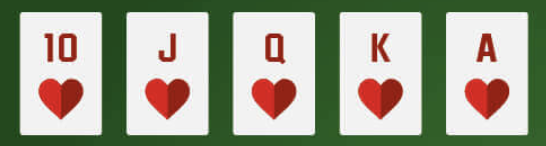
It is the highest possible poker hand. If you get a straight from 10 to Ace and all in the same suit, you get a Royal Flush. Unbeatable.
Examples:
- A♠ K♠ Q♠ J♠ 10♠
- A♥ K♥ Q♥ J♥ 10♥
2) Straight Flush

The second strongest poker hand. It includes five cards in a row, and all must have the same suit.
Examples:
- 6♣ 5♣ 4♣ 3♣ 2♣
- 9♥ 8♥ 7♥ 6♥ 5♥
3) Four of a Kind

In Four of a Kind, your poker hand has four cards of the same rank; it does not matter what their suit is.
Examples:
- K♠ K♥ K♦ K♣ + 3♣
- 9♥ 9♠ 9♦ 9♣ + Q♥
4) Full House

It is a combination of three cards of the same rank but of different suits, plus another two cards of the same rank. In other words, it is a 3 of a Kind plus a Pair.
Examples:
- Q♠ Q♥ Q♦ + 9♣ 9♥
- 7♣ 7♦ 7♥ + A♠ A♦
5) Flush

In a Flush, you have five cards not in sequence but all of the same suit.
Examples:
- A♦ J♦ 8♦ 4♦ 2♦
- K♥ 10♥ 7♥ 5♥ 3♥
6) Straight

In a Straight, you have a sequence of chronological cards with mixed suits; there is no need to have the same suit.
Examples:
- 8♠ 7♥ 6♦ 5♣ 4♠
- A♣ K♦ Q♥ J♣ 10♠
7) Three of a Kind

Three of a Kind, as we explained before, is three cards of the same rank and of different suits.
Examples:
- J♠ J♦ J♥ + 7♣ + 4♠
- 5♥ 5♣ 5♦ + K♠ + 9♦
8) Two Pair

Two Pair is having two different pairs in the same hand, which means you have two cards of the same rank but different suits, and another two cards of the same rank and different suits.
Examples:
- 10♣ 10♦ + 5♥ 5♣ + Q♠
- K♠ K♥ + 3♦ 3♣ + 9♥
9) One Pair

One Pair is having two cards of the same rank and of different suits in your poker hand.
Examples:
- 7♣ 7♥ + A♦ + 9♠ + 3♣
- Q♠ Q♦ + J♥ + 8♣ + 4♦
Understanding Poker Table Positions
When learning how to play poker, one of the most important concepts is the position you are going to be playing in, because this completely changes your poker strategy. Why, you may ask? Because your position determines the order in which you act during a hand. The later you act, the more information you have about other players’ decisions. Thus, you are at more of an advantage. This is why positions are considered important in strategizing what your decision will be. Below is a table showing the name of each position and their abbreviation, as well as where they are exactly located. After that, we will explain the power of each position as well as the reasons for it.
| Order | Position | Description |
| 1 | Button (Dealer) | Acts last after the flop, strongest position |
| 2 | Small Blind (SB) | Posts small blind, acts first after the flop |
| 3 | Big Blind (BB) | Posts big blind, last to act before the flop |
| 4 | Under the Gun (UTG) | First to act before the flop |
| 5 | Middle Position (MP) | Seats between UTG and Cutoff |
| 6 | Cutoff (CO) | Right before the button, second strongest position |
Explanation of Each Poker Position
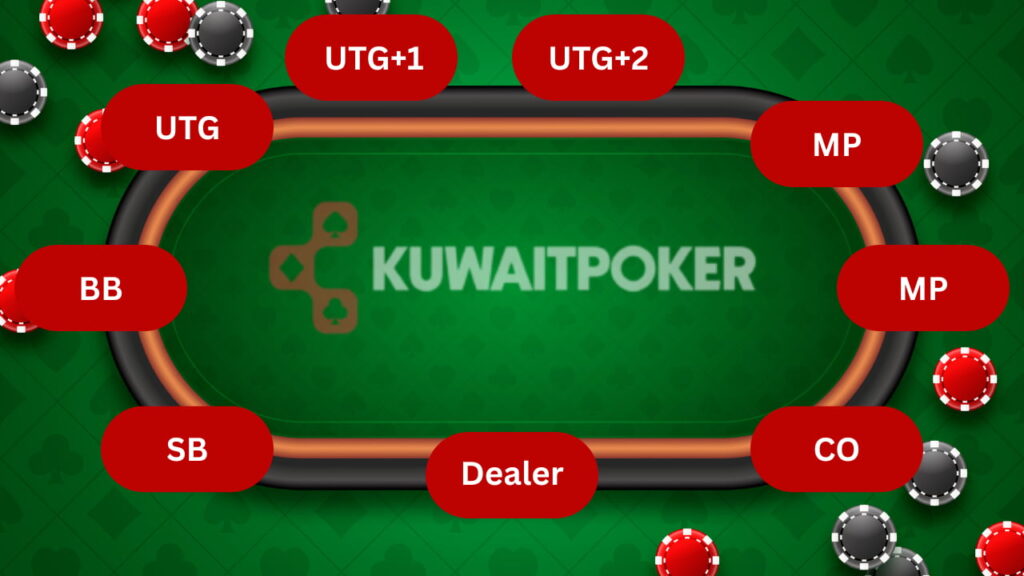
In all poker variants, such as Texas Hold’em, Omaha, Russian Poker, 3-card poker, 5-card stud, etc., the position of where you are sitting at the table is very important. Exceptions include variations like Video Poker or Zynga Poker, because you’re only playing against the pay table, so there are no other players; thus, position is irrelevant. With that said, in the section below of this poker guide you will see the positions you can be placed in at a poker table and the significance of each.
- Button (Dealer) – The button, also called the dealer, is the most powerful and most profitable position at the poker table. Why? Simply because you act last in every betting round after the flop. You can see what all of the players did before you, and then you can make a very educated decision. You have more advantage in terms of information, so you can play more hands, control the size of the pot, and bluff more successfully than from any other seat.
- Small Blind (SB) – The small blind, on the other hand, is actually the weakest position in poker, and it’s very hard to make a decision if you are in that seat. It does force you to learn how to play poker in a disciplined way.Why? Simply because you are forced to put money into the pot before seeing your cards, and after the flop, you act first without knowing what others will do. Playing from this position requires a lot of caution, discipline, and very careful, low-risk hand selection.
- Big Blind (BB) – This is the best position for you to learn poker. You are required to post the biggest forced bet at the table. Before the flop, you act last and may sometimes see the flop for free, but after the flop you will usually be out of position against most players. This position often forces you to defend your blind while playing with limited information.
- Under the Gun (UTG) – This is the first player to act before the flop, which makes it a very uncomfortable and risky position. Since many players act after you, there is a high chance of facing raises. From UTG, you should only play strong premium hands and avoid risky or weak cards.
- Middle Position (MP) – This position is slightly better than UTG but still requires careful play. It makes your learn poker in a balanced way. You are not the first to act, but several players are still behind you. A balanced and selective approach is needed here, mixing strong hands with some playable medium-strength hands.
- Cutoff (CO) – This is the second-best position at the table, right before the button. It helps you control your aggression as you learn how to play poker. Only one player acts after you, giving you a strong advantage. This seat is perfect for playing more hands, being aggressive, and putting pressure on the blinds and weaker positions.
The 7 Rounds of Playing Poker
In our poker guide page, we have now come to the main part of how to play poker. The game, regardless of its variation, consists of seven rounds (Blinds, Deal, Pre-flop, Flop, Turn, River & Showdown). Each round differs in how many hole or community cards you get and whether you will place a bet or not. According to your hands and position at the table, you will be deciding which action to take next.
Round 1: The Blinds

When learning how to play poker, the first step which is the blinds is the most crucial. The first two players start by making mandatory bets to “get the pot started,” so there is money to play for. These initial bets are called blinds. The first player begins with the Small Blind (usually half the minimum bet), then the player next to them places the Big Blind (typically twice the first player’s bet).
Poker Guide Table for the Blinds Round Actions/Scenarios based on the Game Variation
| Variant | Remark |
| Texas Hold’em | Small and big blinds posted |
| Russian Poker | Small and big blinds posted |
| Three Card Poker | Small and big blinds posted |
| 5-Card Stud | Ante + bring-in, no blinds |
| 7-Card Stud | Ante + bring-in, no blinds |
| Sit and Go | Depends on structure (blinds or ante) |
| Pai Gow Poker | Fixed bet or ante |
| Let It Ride | Fixed bet placed before deal |
| Pile-Up Poker | Depends on structure |
| Video Poker / Zynga Poker | Ante or fixed bet before deal |
Round 2: The Deal
The Deal is an important round when learning how to play poker. Each player receives two Hole Cards (cards dealt face down) from the dealer. Different poker variants deal out different numbers of hole cards, and it’s possible to receive 4 or 5.
Poker Guide Table for the Deal Round Actions/Scenarios based on the Game Variation
| Variant | Remark |
| Texas Hold’em | 2 hole cards dealt face down |
| Russian Poker | 2 hole cards dealt face down |
| Three Card Poker | 3 cards dealt to player |
| 5-Card Stud | 1 down + 1 up (varies by rules) |
| 7-Card Stud | 2 down + 1 up |
| Sit and Go | Depends on structure |
| Pai Gow Poker | 7 cards dealt to split into high & low hands |
| Let It Ride | 3 cards dealt initially |
| Pile-Up Poker | Varies per game rules |
| Video Poker / Zynga Poker | 5+ cards dealt to player |
Round 3: The Pre-flop
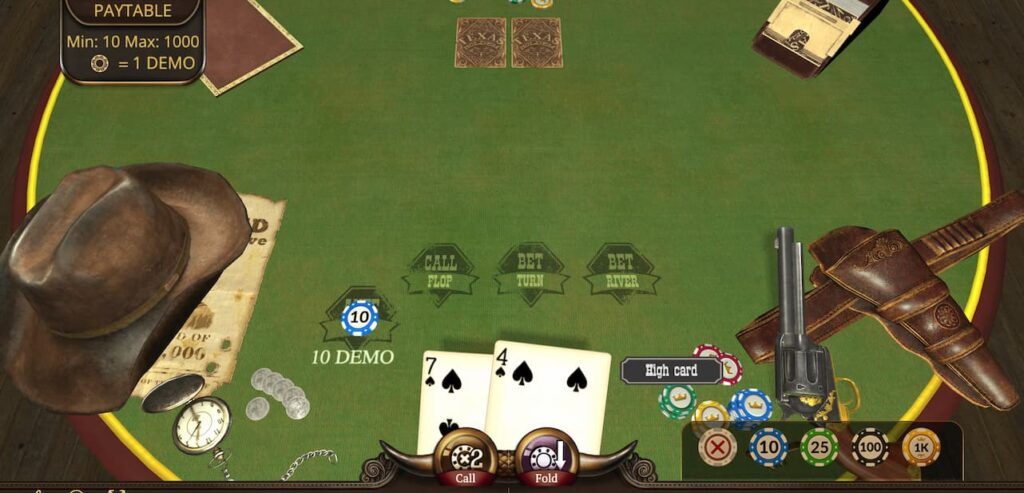
The actual action starts with the player immediately to the left of the Big Blind (the third player), who has to make the first move, choosing one of three next actions:
- Fold (skipping the round if a hand is weak),
- Call (match the amount of the Big Blind)
- Raise (to bet more than the Big Blind)
You must either fold, call, or raise.
Poker Guide Table for the Pre-flop Round Actions/Scenarios based on the Game Variation
| Variant | Remark |
| Texas Hold’em | First betting round after hole cards |
| Russian Poker | First betting round after hole cards |
| Three Card Poker | First betting round after initial 3 cards |
| 5-Card Stud | First bet after initial cards dealt |
| 7-Card Stud | First bet after initial 3 cards |
| Sit and Go | Depends on game structure |
| Pai Gow Poker | First bet after deal |
| Let It Ride | First decision after initial deal |
| Pile-Up Poker | First bet before next card / draw |
| Video Poker / Zynga Poker | Bets placed before cards are dealt |
Round 4: The Flop

Understanding this round is crucial when learning how to play poker. In the flop, the dealer deals three cards face-up to the center of the table (some variations use different numbers of community cards, others none at all).
Once dealt, there are five possible courses of action:
- Check
- Bet
- Call
- Raise
- Fold
Poker Guide Table for the Flop Round Actions/Scenarios based on the Game Variation
| Variant | Remark |
| Texas Hold’em | 3 community cards revealed |
| Russian Poker | Optional / variant dependent |
| Three Card Poker | No flop |
| 5-Card Stud | No flop, next card dealt individually |
| 7-Card Stud | No flop, next card dealt individually |
| Sit and Go | No flop |
| Pai Gow Poker | No flop |
| Let It Ride | No flop, decision made after cards dealt |
| Pile-Up Poker | No flop |
| Video Poker / Zynga Poker | No flop |
Round 5: The Turn

At this stage of poker, the fourth community card is dealt. The value of the hand becomes more “fixed”—if you were ahead on the flop, the turn usually solidifies that lead; if you were behind, your opportunities of catching up are now reduced.
As before, the actions are the same: check, bet, call, raise, or fold.
Poker Guide Table for the Turn Round Actions/Scenarios based on the Game Variation
| Variant | Remark |
| Texas Hold’em | 4th community card revealed |
| Russian Poker | Optional / variant dependent |
| Three Card Poker | Next card / betting round |
| 5-Card Stud | Next card dealt |
| 7-Card Stud | Next card dealt |
| Sit and Go | Depends on structure |
| Pai Gow Poker | Next card / decision |
| Let It Ride | Next card / decision |
| Pile-Up Poker | Next card / decision |
| Video Poker / Zynga Poker | Draw / replace cards |
Round 6: The River

The fifth and last community card is dealt. There won’t be any more cards dealt at this stage; you either have the best hand, or you don’t. Same actions as before: check, bet, call, raise, or fold.
After this, the game will proceed to the showdown.
Poker Guide Table for the River Round Actions/Scenarios based on the Game Variation
| Variant | Remark |
| Texas Hold’em | 5th and final community card |
| Russian Poker | Optional / variant dependent |
| Three Card Poker | Last card / final betting round |
| 5-Card Stud | Last card dealt |
| 7-Card Stud | Last card dealt |
| Sit and Go | Depends on structure |
| Pai Gow Poker | Last card / final decision |
| Let It Ride | Last card / final decision |
| Pile-Up Poker | Last card / final decision |
| Video Poker / Zynga Poker | Draw / final hand evaluated |
Round 7: The Showdown
The last players display their “hole cards” in order to see who has the best hand. The winner is determined by the seven cards that they have (2 private cards + the 5 community cards). The dealer or software scans the players cards and the 5 community cards and picks the strongest 5-card combo of each player (could be 2+3, 1+4, or 0+5 board). In other words, it could use:
- Both hole cards.
- One hole card.
- The 5 community cards (if they are stronger than any combination of the hole cards).
The player with the highest auto-detected five-card hand takes the pot. If more than one player has exactly the same winning hand, the pot will be “chopped” (split equally) between them. If you want to learn poker, you should understand that it does not always reach round.
Poker Guide Table for the Showdown Round Actions/Scenarios based on the Game Variation
| Variant | Remark |
| Texas Hold’em | Best 5-card hand wins |
| Russian Poker | Best hand wins |
| Three Card Poker | Best 3-card hand wins |
| 5-Card Stud | Best 5-card hand wins |
| 7-Card Stud | Best 5-card hand wins |
| Sit and Go | Depends on game rules |
| Pai Gow Poker | Split hand (high & low) evaluated |
| Let It Ride | Best hand wins |
| Pile-Up Poker | Best hand wins |
| Video Poker / Zynga Poker | Hand compared to paytable |
Poker Guide FAQs by Kuwaiti Players
What is the first step I need to do if I want to learn to play poker?
If you want to learn to play poker, the first and most important thing you need to do is learn the rules, understand the rounds, the hand rankings, as well as the positions at the table, and learn some key terminology.
How do you win poker?
Winning poker is simple. You just win the pot either by having the best cards in the showdown round or by convincing other players that their hand is weaker than yours and thus forcing them to fold early.
What are the actions I can take during a poker round?
There are five main actions you can take during a poker round, which were explained in this how to play poker guide and they are: check, bet, call, raise, and fold.
What are community cards?
Community cards are face-up cards placed at the center of the table that all players can use to form the best possible hand.
What are hole cards?
Hole cards are face-down private cards that are dealt to each player at the start of the hand, and only they can see them.
Which position is the strongest to play from?
The button, which is also called the dealer, is the most powerful and most profitable position at the table. Because you act last in every betting round after the flop, thus giving you more information about what others’ decisions were, helping you to make a more informed decision.
How many poker hands are there and which one is the strongest?
There are 10 main poker hands, the lowest being the high card, and the strongest being the royal flush, which is a straight from 10 to Ace, all in the same suit.
Is it difficult to learn how to play poker?
It’s not difficult to learn how to play poker, but poker is a game that depends a lot on strategy, and you really need to be very familiar and comfortable with all scenarios, game variations, and hands, and memorize everything before you are able to become a good player.
 Online Poker Sites
 Live Poker
 Poker Strategy
 Poker Games
 Poker Texas Holdem
 Blog
Blog